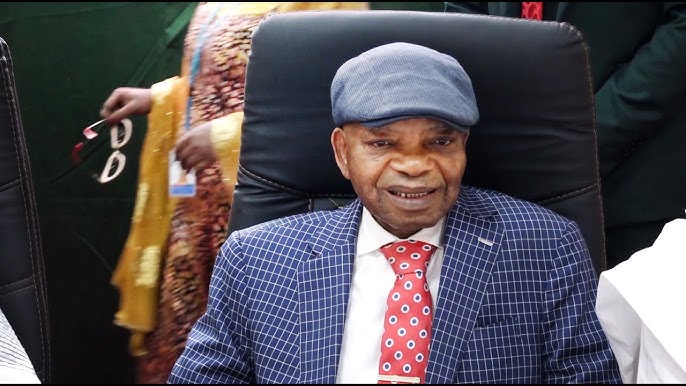
Billionaire and energy magnate Arthur Eze is embroiled in a high-stakes financial and regulatory standoff with the government of Equatorial Guinea, as authorities demand a $10 million bonus payment for the reinstatement of valuable oil blocks previously operated by his company, Atlas Oranto Petroleum.
License Revocation and Financial Demand:
In September 2023, the Ministry of Mines and Hydrocarbons of Equatorial Guinea revoked two exploration licenses held by Atlas Oranto Petroleum—Block I and Block J—citing repeated violations of the Production Sharing Contract (PSC) terms. The specific breaches included:
- Failure to meet agreed work program obligations
- Non-compliance with local content requirements
- Outstanding financial commitments to the state
The government has now formally communicated that Eze must pay a $10 million signature bonus to enter negotiations for the return of the blocks. This payment is a precondition for any discussion regarding the renewal or reissuance of the licenses.
Background and Strategic Context:
Atlas Oranto, founded by Arthur Eze in 1991, is one of Nigeria’s largest privately held oil and gas firms. The company has historically held significant assets in Equatorial Guinea, a country with proven crude oil reserves of approximately 1.1 billion barrels and natural gas reserves exceeding 1.3 trillion cubic feet. The revoked blocks were part of Atlas Oranto’s core exploration portfolio in the region.
Eze’s relationship with Malabo has been under strain due to prolonged inactivity on the blocks and alleged arrears in financial obligations. Industry sources suggest that Atlas Oranto may have outstanding fees amounting to several million dollars in addition to the newly demanded bonus.
Global Expansion Amid Regional Challenges:
Despite setbacks in Equatorial Guinea, Eze continues to pursue an aggressive global expansion strategy:
In Uganda, Atlas Oranto secured a two-year extension for its Ngassa Deep and Ngassa Shallow exploration licenses in the Albertine Graben. Under the renewed terms, the company must drill:
- At least one exploration well
- One appraisal well (contingent on discovery)
- Total committed investment: $80–100 million
In Venezuela, Atlas Oranto signed a major prospecting agreement in August 2024, targeting reserves in the Orinoco Belt, which holds estimated proven reserves of 304 billion barrels of heavy crude. This move signals Eze’s ambition to diversify beyond Africa.
Financial and Market Implications:
The demand for a $10 million payment comes at a time when international oil companies are reassessing their portfolios in West Africa due to regulatory uncertainties and fiscal pressures. If Eze fails to pay, Atlas Oranto risks:
- Permanent loss of the Equatorial Guinea assets
- Weakened negotiating position in other jurisdictions
- Reputational damage affecting future licensing rounds
Conversely, payment could allow Eze to:
- Reclaim blocks with significant untapped potential
- Restore diplomatic and commercial relations with Malabo
- Stabilize Atlas Oranto’s regional presence
Industry Reaction and Next Steps:
Energy analysts suggest that Eze is likely to negotiate the terms of the bonus payment, possibly seeking phased payments or tying it to future production bonuses. The outcome will be closely watched by other independents operating in the region, such as Kosmos Energy and VAALCO Energy.
Arthur Eze, with an estimated net worth of $5.8 billion, has the financial capacity to meet the demand but may choose to reallocate capital to more promising assets in Uganda or Venezuela.
This situation underscores the increasing assertiveness of resource-rich nations in enforcing contract terms and maximizing revenue from their hydrocarbon resources. For Arthur Eze, the decision will significantly influence the future trajectory of Atlas Oranto—and his legacy as one of Africa’s most resilient oil tycoons.