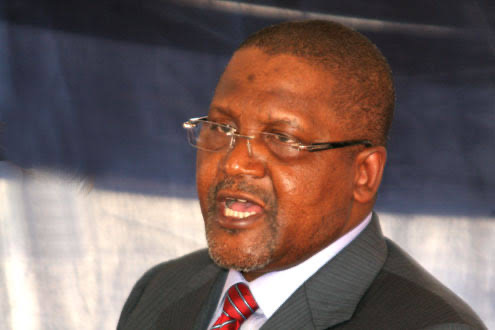
The Dangote Group, through its telecommunications subsidiary Alheri Engineering, is in advanced discussions to acquire Intercellular Nigeria Limited, a move that could significantly reshape Nigeria’s telecom landscape.
According to industry sources, negotiations between Dangote Group and Intercellular have been ongoing for some time, though both parties have yet to reach a final agreement, particularly on the financial terms of the takeover.
Alheri’s Expansion Strategy
The interest in Intercellular follows Alheri Engineering’s recent success in securing a 3G license from the Nigerian Communications Commission (NCC) in January 2007. The company, owned by Africa’s richest businessman Aliko Dangote, sees the acquisition of Intercellular as a strategic step toward strengthening its market presence, particularly in the broadband and mobile telecom segments.
Industry experts suggest that acquiring a fixed wireless operator like Intercellular would provide Alheri with an existing network infrastructure, allowing it to fast-track its nationwide 3G rollout.
When contacted for comments, Dangote Group’s spokesperson, Mr. Joseph Okonmah, declined to confirm or deny the acquisition talks, stating:
“I cannot comment on it for now.”
However, he affirmed that Alheri Engineering is preparing to roll out its 3G services across the country, adding:
“Preparations are in top gear to roll out. Though I cannot ascribe a date to it, by the time of the rollout, we will have substantial coverage in the country.”
Intercellular’s Struggles and Past Sale Attempts
Intercellular, which began operations in 1998, has built a strong market presence in Lagos, but unlike its competitors, it has struggled to secure the financial backing necessary for a national rollout.
In 2006, Intercellular was among the six firms that acquired a Unified Access Service License (UASL) from the NCC, positioning itself to offer national mobile services with full roaming capabilities. However, despite the license, its expansion plans have remained stalled due to financial constraints.
This is not the first time Intercellular has attempted to sell part of its business. In January 2006, the company announced that it had sold a 51% stake to South Africa’s Telecel for $137.5 million, but by February 2007, the deal had collapsed.
Beyond Nigeria, Intercellular had secured a telecom license in Sierra Leone in 2004 and had applied for licenses in Benin, Chad, Guinea, Liberia, and Mali.
Intercellular’s Communications Director, Mr. Fidel Otuya, confirmed that the company is in discussions with potential investors, though he neither confirmed nor denied whether Dangote Group was among them.
Market Consolidation and Competitive Landscape
The Nigerian telecom industry has been undergoing rapid consolidation, with bigger players acquiring smaller operators in response to the Unified Access Service License regime introduced by the NCC.
•Earlier in 2007, MTN Nigeria acquired VGC Communications for $75 million.
•Jim Ovia’s Visafone acquired Cellcom Limited in a deal worth N4 billion ($33 million).
With the Unified Access Service License enabling operators to provide both fixed and mobile services, major telecom firms are aggressively acquiring existing operators to expand their market share.
If Dangote Group successfully acquires Intercellular, it would mark a major step toward becoming a key player in Nigeria’s telecom sector, directly competing with MTN, Glo, Celtel, and the emerging Visafone.
Looking Ahead
As negotiations continue, industry observers believe that the acquisition could provide Intercellular with the financial strength it has long lacked, while giving Alheri Engineering a ready-made network to fast-track its 3G deployment.
With Nigeria’s telecom sector growing at an unprecedented pace, the entry of Aliko Dangote—Africa’s most powerful industrialist—into the space could signal the beginning of a new era of competition in both the broadband and mobile services market.