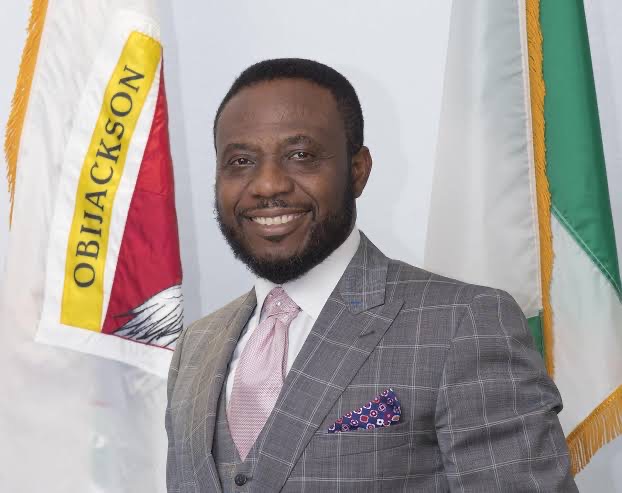
The story of how Nigerian oil and gas magnate Dr. Ernest Azudialu-Obiejesi came within a hair’s breadth of acquiring a 16% stake in Diamond Bank for $120 million is one of ambition, power plays, and ultimately, missed opportunities. This intricate tale, set against the backdrop of Diamond Bank’s meteoric rise and catastrophic fall, reveals the complex machinations behind the scenes of corporate Nigeria.
The Spark That Lit the Flame
In 2014, Diamond Bank was at its zenith. Under the leadership of Alex Otti, its Group Managing Director (GMD) and CEO, the bank had risen to become one of Nigeria’s most formidable financial institutions. It had earned the prestigious title of one of the Central Bank of Nigeria’s “Systemically Important Banks,” a designation reserved for banks considered too big to fail.
However, trouble was brewing behind the scenes. Actis, a private equity firm and one of Diamond Bank’s key international shareholders, had grown disillusioned with the management under Pascal Dozie, the bank’s founder and Chairman. Actis, which owned 16% of the bank, decided to divest from its holdings. But instead of offering the shares to Dozie, Actis approached Alex Otti, who had a sterling reputation for professionalism and integrity, to broker the deal.
Actis and Alex Otti: A Strategic Offer
Actis’s move to bypass Dozie was not entirely unexpected. Over the years, the relationship between Actis and Dozie had soured. Actis had long advocated for international best practices and robust corporate governance within the bank, but their efforts often clashed with Dozie’s management style, which they perceived as overly controlling and resistant to change.
When Actis approached Otti with the offer to buy their shares for $120 million at N7.50 per unit (a slight discount from the market price of N9), it was both a vote of confidence in Otti and a subtle rebuke of Dozie. Surprised but loyal, Otti informed Dozie of the offer, assuming the chairman would exercise his “right of first refusal” as stipulated in Actis’s shareholder agreement.
The Search for a Buyer
Pascal Dozie, however, confessed to Otti that he did not have the funds to acquire the shares. Instead, he authorized Otti to find a willing investor who could purchase them. Otti, ever resourceful, turned to Dr. Ernest Azudialu-Obiejesi, the flamboyant chairman and CEO of Nestoil Limited, one of Nigeria’s largest indigenous oil and gas companies.
Azudialu was the perfect candidate. Known for his bold business moves and vast wealth, the Anambra-born billionaire had the financial muscle and strategic vision to make such a significant investment. Intrigued by the offer, Azudialu immediately mobilized resources, reaching out to financial institutions and investors to raise the $120 million required for the transaction.
The Deal on the Brink of Closure
Within weeks, the deal was taking shape. Due diligence had been conducted, and both parties had reached an agreement. Otti, acting as the intermediary, was optimistic about the transaction, seeing it as a win-win for Diamond Bank and its stakeholders. Azudialu’s entry as a major shareholder would not only provide the bank with much-needed capital but also signal a new era of strategic growth.
Dozie, too, appeared satisfied. He met with Azudialu to discuss the transaction, expressing his approval and readiness to facilitate the process. The shares, valued at $120 million, represented a significant infusion of funds that could further solidify the bank’s position in Nigeria’s competitive banking sector.
All that was left was for the final paperwork to be signed.
The Shocking U-Turn
But just two days before the deal was to be finalized, Pascal Dozie made a dramatic about-face. In a phone call to Otti, he declared, “Alex, on second thoughts, I think you should hold action on that matter. This Actis people want to take me for granted, but I will teach them a lesson. My children and I have decided to raise money and pick up the shares ourselves.”
Otti was stunned. He had worked tirelessly to bring the deal to the brink of closure, and Azudialu had already incurred significant costs in mobilizing the funds. Otti protested, warning Dozie of the reputational damage this abrupt reversal could cause. But Dozie was adamant.
The Costliest Gamble of Pascal Dozie’s Career
Determined to keep control of the bank, Dozie approached GTBank to secure a $125 million loan. He pledged his flagship investments in MTN Nigeria as collateral and included a securitization basket that even encompassed his personal residences. This high-stakes gamble was seen by many as an act of desperation.
Meanwhile, Azudialu, furious at the sudden turn of events, considered legal action to recover the costs he had incurred. However, he was eventually persuaded against it by Igwe Nnaemeka Achebe, the Obi of Onitsha and the Chairman of Diamond Bank’s Board of Directors.
The Fallout
Dozie’s decision to buy the Actis shares proved to be a disastrous miscalculation. The Nigerian economy soon plunged into recession, and the naira’s exchange rate plummeted from N160 to the dollar in 2014 to over N500 before stabilizing at N360. The shares Dozie had acquired for $120 million at N7.50 per unit dropped to an all-time low of N1 per unit.
As the financial strain mounted, Dozie struggled to service his loan with GTBank. The bank’s fortunes continued to decline under the leadership of his son, Uzoma Dozie, who had been installed as GMD/CEO in 2014. Poor risk management, weak corporate governance, and a lack of strategic direction compounded the problems.
By 2018, Diamond Bank was on the brink of collapse. To prevent total insolvency, Dozie was forced to sell the bank to Access Bank in a fire sale.
A Deal That Could Have Changed Everything
Had the deal with Azudialu gone through, Diamond Bank’s fate might have been different. With $120 million in fresh capital and the strategic backing of a visionary investor like Azudialu, the bank could have weathered the economic downturn and emerged stronger.
Instead, Dozie’s insistence on retaining control at all costs led to the unraveling of one of Nigeria’s most promising financial institutions.
Legacy of a Missed Opportunity
For Ernest Azudialu, the aborted deal remains a what-if moment in his illustrious career. For Diamond Bank, it was a turning point that marked the beginning of its end. And for Pascal Dozie, it was a costly gamble that not only jeopardized his legacy but also extinguished the brightest symbol of Igbo entrepreneurial excellence in Nigeria’s banking sector.
In the end, the story of how Ernest Azudialu almost bought Diamond Bank is not just a tale of business ambition but a cautionary lesson in the dangers of hubris and the high price of missed opportunities.